For an athlete, few things are worse than being sidelined by an injury. Whether you compete at high levels or play on weekends, your main goal after getting hurt is getting back in the game safely. This process is called "return to play," and working with a sports physical therapist can make it happen successfully.
A sports injury isn't just a temporary setback. If not managed properly, it can affect your performance and health for years. Sports rehab has advanced by 2025, offering athletes a clear path to recovery. In this post, we'll explore how a sports physical therapist helps injured athletes return to play safely, improve performance, and come back stronger.
Why Patience and Planning Matter in Return-to-Play

After an injury, wanting to jump back into action makes sense. However, returning to sports too soon is one of the biggest risk factors for reinjury, according to Shirley Ryan AbilityLab. Rushing back can set you back by months or even years if you suffer a setback.
This isn't just for elite athletes. Recreational athletes in local leagues or at the gym risk chronic pain and reduced performance if they don't fully heal first.
Consider a serious injury like an ACL tear. Research from University of Utah Health shows that each extra month of rehab (up to about a year) can cut re-injury risk by roughly 50%. Returning to sport before 9 months post-surgery makes you 6.7 times more likely to suffer another ACL injury.
Key takeaway: A bit more patience during rehab pays off in long-term health.
Patience doesn't mean doing nothing. It means following a structured plan. One study from MedBrevia found that athletes who began physical therapy within a week of injury returned to sport over five weeks sooner. Even if you feel good, your body may have healing left to do behind the scenes.
How a Sports Physical Therapist Guides Your Recovery
A sports physical therapist specializes in working with athletes and active people. Unlike general rehab that focuses on basic daily tasks, sports physical therapy tailors treatment to your specific sport and goals.
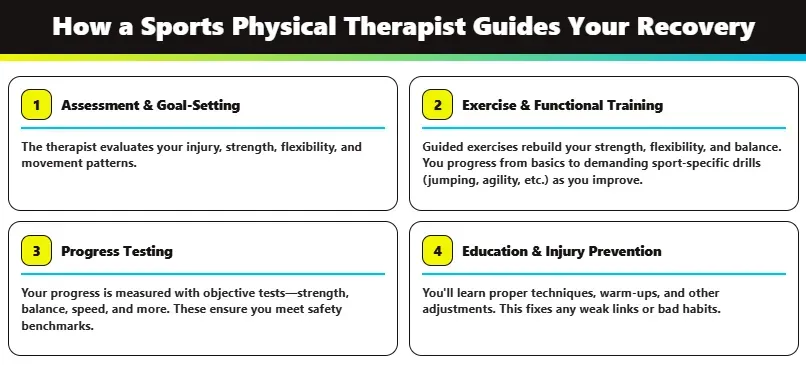
A sports injury physical therapist creates a complete return-to-play plan that includes:
Assessment & Goal-Setting: The therapist evaluates your injury, strength, flexibility, and movement patterns. They then map out a rehab plan based on your sport and goals.
Exercise & Functional Training: Guided exercises rebuild your strength, flexibility, and balance. You progress from basics to demanding sport-specific drills (jumping, agility, etc.) as you improve. This bridges the gap between rehab and real competition.
Progress Testing: Your progress is measured with objective tests—strength, balance, speed, and more. These ensure you meet safety benchmarks. Return-to-play decisions are based on these measures, according to the American Orthopaedic Society for Sports Medicine.
Education & Injury Prevention: You'll learn proper techniques, warm-ups, and other adjustments. This fixes any weak links or bad habits, so you return with better habits that prevent future injuries.
Proven Results
Using this well-rounded approach, sports physical therapy produces excellent outcomes. One study published in the International Journal of Sports Physical Therapy observed that 86% of athletes had less pain and 73% regained full function after rehab. Most returned to sport with few re-injuries.
Another big benefit of working with a sports injury physical therapist is the focus on you as an individual. They know each athlete and injury is unique. They adjust your plan based on your progress.
Many athletes feel anxious about getting hurt again. Gradually pushing your limits under professional guidance helps rebuild confidence. Fear of re-injury is a top reason athletes don't return to sport, according to AOSSM research. Restoring trust in your body is a key part of rehab.
Beyond Rehab: From Recovery to Peak Performance
Sports physical therapy doesn't just get you back to baseline. It pushes you to improve. A sports physical therapist can act as an athlete performance physical therapist, helping you come back not just healthy but faster and stronger.
Once you're healed, your therapist addresses any weaknesses or technique issues that might have caused your injury. They might focus on:
- Agility drills specific to your sport
- Plyometric exercises to improve explosive power
- Movement analysis to fine-tune technique
- Injury-prevention exercises that integrate into training
This forward-thinking approach is why elite and professional teams employ athlete performance physical therapists. Anyone can benefit, not just pros. You'll be in the best shape of your athletic life if you commit fully to rehab.
In fact, many athletes find they perform better after recovering from an injury because they paid attention to neglected weaknesses. You invest time learning proper form and building a stronger foundation. This often leads to fewer future injuries and a longer, more enjoyable athletic career.
Sports Physical Therapy in Parker, TX: Your Comeback Journey

If you're in North Texas and need help with your return to play, consider sports physical therapy in Parker, TX. Local clinics like AthleteRx Rehab specialize in sports injury physical therapy and return-to-play programs. Working with a local sports physical therapist offers convenience for consistent sessions and personalized care.
Every athlete's journey is different. Some recover in weeks, while others need months. A therapist who understands your sport, injury, and goals will create a plan designed for you. Whether you're recovering from surgery, a muscle strain, or a chronic condition, sports physical therapy gives you the best chance for a successful return.
Remember, returning to play isn't a race. It's about making sure you come back strong, confident, and ready to perform at your best. The right support makes all the difference.
Get Back in the Game Stronger
Returning to play after an injury requires more than rest. It takes a smart plan, expert guidance, and commitment to rehab. A sports physical therapist partners with you to rebuild strength, restore confidence, and return to sport stronger than before.
Don't rush the process. Take time to heal properly. Whether you need sports physical therapy in Parker, TX, or elsewhere, finding the right therapist can transform your recovery. Your future self will thank you for taking the right steps now.
If you need sports physical therapy in Parker, TX, contact AthleteRx Performance Rehab to book an evaluation.