Sports injuries don't wait for the right moment. The instant you fall, the clock starts to run, regardless of whether you have a torn ligament or a sprained ankle. Sports rehabilitation provides players with a methodical, tried-and-true route back to peak performance. Healing is only one aspect of it. It's about coming back stronger, wiser, and better equipped than before.
What Is Sports Rehabilitation?
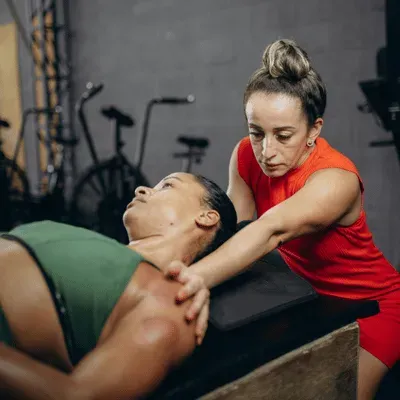
Sports rehabilitation is a specialized form of physical therapy built around the demands of athletic performance. It goes well beyond basic injury care.
The goal isn't just to make the pain stop. It's to restore full strength, mobility, and sport-specific function so athletes can return to play at 100%.
Key components of sports rehabilitation include:
- Therapeutic exercises to rebuild strength and flexibility
- Sports manual therapy for joint and soft tissue work
- Balance and coordination training
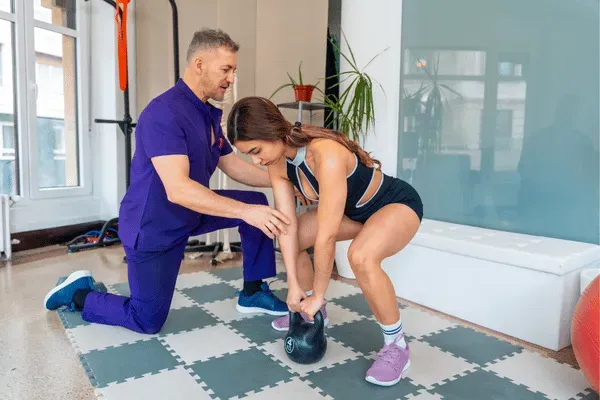
- Sport-specific movement drills
- Education on injury prevention and body mechanics
This is what separates athlete rehabilitation from standard physical therapy. The plan is built around your sport, your position, and your body.
How Hands-On Physical Therapy Speeds Up Recovery
Manual therapy, also known as hands-on physical therapy, is one of the best methods in sports rehabilitation.
This involves myofascial release, joint mobilization, targeted massage, and assisted stretching. Comfort measures are not what they are. They accelerate the healing process, enhance joint range of motion, and directly lessen pain.
Research shows that sports manual therapy combined with therapeutic exercise leads to significantly better functional recovery after sports injuries.
But passive treatment is only part of the picture. The real work happens when athletes engage in active rehab.
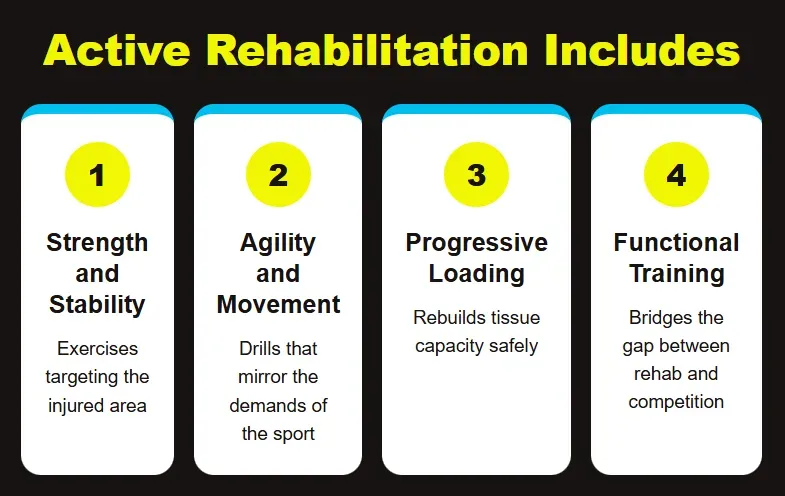
Active rehabilitation includes:
- Strength and stability exercises targeting the injured area
- Agility and movement drills that mirror the demands of the sport
- Progressive loading to rebuild tissue capacity safely
- Functional training to bridge the gap between rehab and competition
Early intervention is crucial, as one physical therapy clinician observed, "The faster you get in and we address the issues, the quicker we can get you back." The underlying issue cannot be resolved by resting and icing alone.
Structured sports rehabilitation programs helped injured players return to play more quickly and completely, according to a 2024 systematic study published in the African Journal of Biomedical Research. More than 63% of injured athletes who finished individualized therapy were able to return to competition, with a re-injury rate of just 9%, according to a secondary clinical trial. Those figures are impressive.
How Sports Rehab Improves Athletic Performance
Here's what most athletes don't expect: sports rehabilitation can make you a better athlete, not just a healthy one.
When you go through proper athlete rehabilitation, therapists don't just address the injury. They identify and fix the movement patterns, muscle imbalances, and biomechanical issues that may have led to the injury in the first place.
Examples of performance gains through rehab:
- Stronger core leading to better speed and power output
- Improved hip mobility, reducing strain on knees and lower back
- Refined running or throwing mechanics lowering future injury risk
- Increased joint stability for more efficient movement under load
According to research published in the International Journal of Sports Physical Therapy, sports physical therapy goes beyond basic rehab to optimize athletes beyond their pre-injury baseline.
There's a mental benefit, too. Working through rehab in a controlled, supported environment builds trust in your body. Athletes who complete structured sports rehabilitation report less fear of re-injury and greater confidence when they return to competition.
Injury Prevention: The Long-Term Payoff
The work you put into rehab today pays off long after you're back on the field.
Hands-on physical therapy and targeted exercise help therapists identify your weak links. Leg strength imbalances. Poor shoulder mobility. Limited ankle stability. These are the factors that set athletes up for repeat injuries.
Sports manual therapy, combined with corrective exercise, resolves these difficulties before they produce another setback. Research consistently suggests that treating biomechanical impairments through athlete rehabilitation lowers the likelihood of future injury.
Athletes also get practical skills, such as improved warm-up practices, adequate stretching routines, and strength training to safeguard their bodies throughout competition.
Sports rehabilitation is more than just a response to injury. It's an investment in your long-term wellness.
Take the Next Step Toward a Stronger Return to Sport
Sports rehabilitation gives athletes the tools to heal faster, move better, and perform with more confidence. At AthleteRx Performance Rehab, that process is backed by more than 10 years of experience, a strong history of serving athletes and active individuals across Parker, Plano, and Allen, and elite-level training designed to help people return stronger than before. Led by Dr. Ben Volkman, AthleteRx combines advanced sports rehab methods with a performance-based approach that goes beyond pain relief to rebuild strength, resilience, and trust in your body.