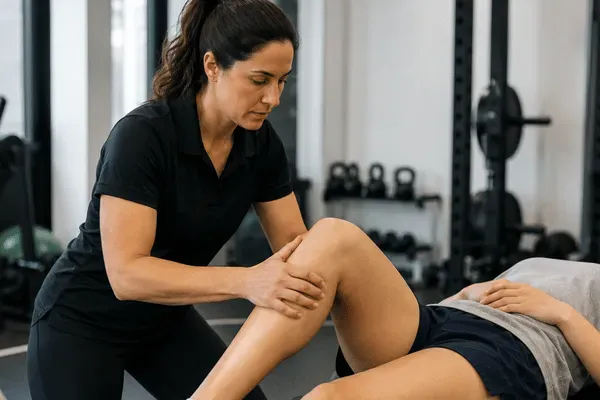
Sports manual therapy helps athletes move with less pain during rehab. We use skilled hands-on care to improve motion, ease sore joints, and prepare the body for exercise. At AthleteRx Performance Rehab, sports manual therapy is paired with strength work, movement training, and blood flow restriction therapy when it fits the athlete's stage of care.
What Sports Manual Therapy Does in Rehab
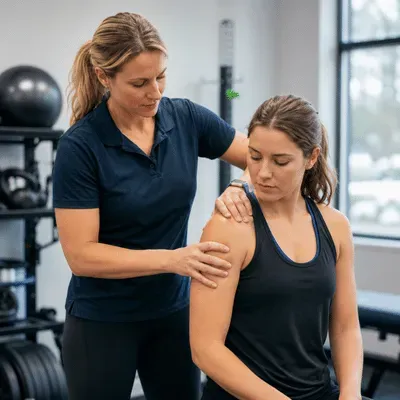
Hands-on treatment is employed in sports manual therapy. It involves stretching, guided movement, joint mobilizations, and soft tissue work.
The objective is not to "repair" an injury on its own. The aim is to reduce discomfort and stiffness that may impede exercise and movement progression.
Sports manual therapy is beneficial for:
- Temporary alleviation of discomfort
- Improved movement of the joints
- Reduced stiffness following surgery or an injury
- Greater comfort while exercising early
- Increased self-assurance when moving
Manual treatment is more effective when combined with active rehabilitation, according to a 2023 study published in the International Journal of Sports Physical Therapy. Sports manual treatment should therefore complement training rather than take its place.
How Manual Therapy for Athletes Supports Recovery
Manual therapy for athletes is useful when pain limits normal movement. It gives the athlete a better chance to train at their best.
For example, an athlete with knee stiffness after surgery may not squat well at first. Hands-on physical therapy can help reduce tightness before strength work begins.
An athlete with shoulder pain may also move with fear. Sports manual therapy can help calm the area. Then the athlete can begin safe loading with better form.
Orthopedic manual therapy may be used for joints, muscles, and soft tissue. It is part of a full care plan. It is not a stand-alone cure.
A strong rehab plan still needs:
- Clear testing
- Progressive strength work
- Sport-based movement
- Load control
- Return-to-play planning
This is why manual therapy for athletes works best in a full rehab setting.
Sports Manual Therapy vs Massage Therapy: What's the Difference?
Sports manual therapy and massage therapy both use hands-on treatment, but they are not the same. Sports manual therapy is part of a comprehensive rehab plan. It focuses on improving joint motion, reducing pain, and preparing the athlete for exercise.
Massage therapy is often used to reduce muscle tension and support relaxation. It may help athletes feel better, but it does not usually include the same level of injury testing, movement assessment, or return-to-sport planning.
| Treatment | Primary Goal |
|---|---|
| Sports manual therapy | Improve movement, reduce pain, and support rehab with exercise-based care |
| Massage therapy | Reduce muscle tension, improve comfort, and support relaxation or recovery |
Why Sports Manual Therapy and BFR Work Well Together
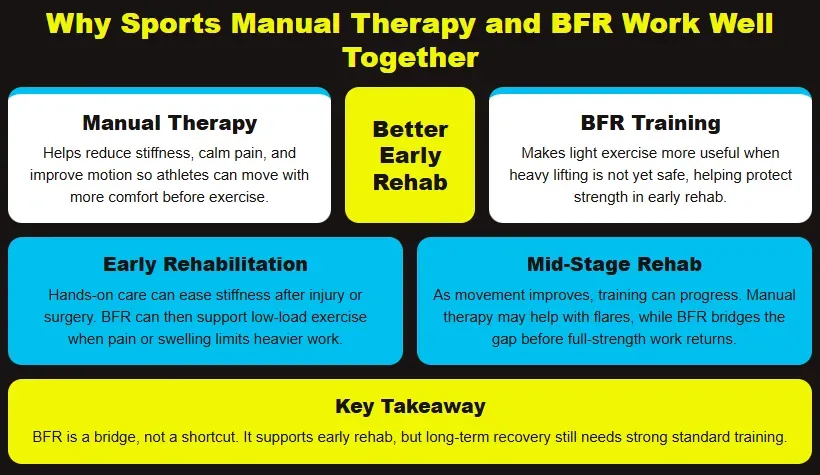
Sports manual therapy gets athletes moving better. BFR can make light exercise more useful early on in the rehab process. This combination can help athletes in the early and mid-stages of their rehab journey.
Early rehabilitation
Pain and swelling can limit range of motion after surgery or acute injury. Hands-on physical therapy can help reduce stiffness and ease pain. This combined with low-load exercise like BFR can help protect muscle mass when you're not yet ready for heavy lifting.
Mid Stage Rehab
As motion improves, the training intensity and load needs to progress.
A 2023 ACL study found better early strength and patient scores at six weeks with BFR-based rehab. Those gains were not as clear at later stages.
A 2025 study in Medicine & Science in Sports & Exercise found BFR was not better than strong standard ACL rehab in terms of later recovery.
That is why BFR should be seen as a bridge. It can help with early work, but it is not a shortcut.
Safety and Screening for BFR
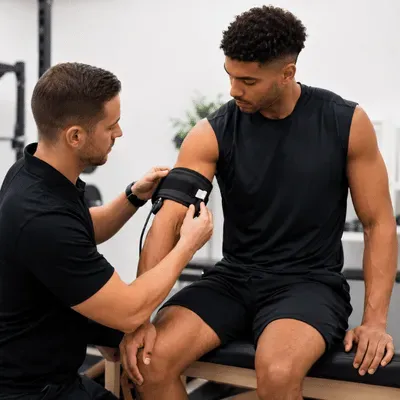
BFR must be used with care. The Australian Institute of Sport recommends screening before first use. It also recommends new screening after major health changes.
BFR is not right for everyone.
People should not use BFR if they have:
- Peripheral vascular disease
- Past vascular surgery on the affected limb
- An arteriovenous fistula in the affected limb
Some health issues need medical review first. These may include high blood pressure, a history of clotting, stroke, or heart concerns.
Tell your clinician right away if you feel:
- Sharp pain
- Numbness or tingling
- Dizziness
- Faintness
- Unusual swelling
A 2022 Frontiers in Physiology paper supports structured screening before BFR. Screening helps clinicians spot higher-risk patients before treatment starts.
At AthleteRx Performance Rehab, sports manual therapy and BFR are guided by the athlete's injury, goals, and stage of care.
The Bottom Line
During rehabilitation, sports manual therapy helps to optimize athletes' flexibility and movement patterns.
Book your evaluation with AthleteRx Performance Rehab today. Get a customized rehab plan built for your sport, injury, and return to sport goals.