Sports rehabilitation has moved beyond just healing injuries. Now, it's about helping athletes return stronger, faster, and more resilient. This new approach is called performance rehab. Instead of ending when the pain goes away, performance rehab aims to boost performance and prevent future injuries. It blends traditional sports therapy with advanced training to help athletes return at their best.
What Is Performance Rehab?
Performance rehab is a newer kind of sports rehab for athletes. It does more than just fix the injury. The process keeps going until the athlete is fully healed and performing even better than before.
A sports medicine expert in the International Journal of Sports PT explained that simply returning an athlete to their pre-injury level is not enough. True recovery means going beyond that baseline.
Here's how performance rehab differs from traditional approaches:
Stay active while healing: Traditional rehab often tells athletes to rest and stop activity. Performance rehab puts the athlete first. It keeps athletes moving safely by adjusting exercises so they can continue training during recovery. As the saying goes, "movement is medicine—when it's properly dosed and coached."
Regular physical therapy and returning to full training are separated by performance rehabilitation. When you are able to move "normally" once more, it continues. Rather, it gradually incorporates drills and moves unique to each sport that mimic what you do in actual games. A soccer player may begin performing light kicking drills and basic agility exercises while healing. The work gradually approaches actual match speed, facilitating a more seamless, secure, and organic return to sports.
Key Components of Performance Rehab
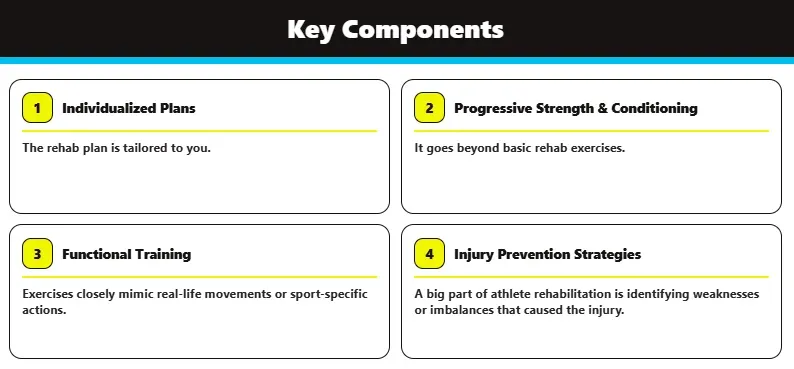
Performance rehab programs are highly customized but share several key elements:
Individualized Plans
The rehab plan is tailored to you. It considers your sport, position, injury, and goals. A recreational runner's needs differ from an Olympic weightlifter's. Performance rehab meets each athlete where they are.
Progressive Strength & Conditioning
It does more than just simple rehab exercises. Athletes get stronger, build stamina, and move better as they recover. Instead of stopping when you can just get by, this approach helps you reach your old level and even improve.
Functional Training
Exercises closely mimic real-life movements or sport-specific actions. Instead of isolated muscle drills, you practice movements needed in your sport, like jumping, throwing, cutting, or lifting. This functional focus prepares your body for exact sport demands.
Injury Prevention Strategies
A big part of athlete rehab is finding weak spots or uneven areas that may have led to the injury. By making your core stronger, helping your joints move better, or fixing the way you move, athletes build a stronger base. This makes future injuries less likely because the main problems are fixed. This comprehensive approach is becoming "the gold standard for recovery and performance enhancement" in modern sports medicine.
Why Elite Athletes Need Performance Rehab
The stakes are high for elite athletes. A half-season absence or a subpar return could be the difference between winning and losing. For this reason, elite professionals believe that performance rehabilitation is essential.
According to research from Mass General Brigham, elite athletes recover more quickly because they have access to advanced therapies, sports scientists, and comprehensive rehab teams. Every day, they devote a substantial amount of time to their recovery regimens.
Here are key reasons why performance rehab is critical:
Faster Recovery & Less Downtime
Performance rehab uses every tool to help you heal faster. Top sports medicine teams do more than just rest. They use the latest sports therapy methods to help you recover more quickly. Techniques include:
- Compression therapy
- Laser therapy
- Cryotherapy
- Blood-flow restriction training
These technologies help reduce pain and promote tissue healing faster. By addressing the injury's root cause, performance rehab accelerates the healing process and minimizes downtime.
Stronger Comeback
A major goal is not just getting back to baseline. It's returning stronger and more efficient than before. By rebuilding strength, power, and technique, athletes can improve during rehab. Sport-specific rehab often leads athletes to return stronger than before injury—many exceed their previous level upon return to sport.
Injury Prevention & Longevity
Nothing is worse than getting hurt again. Sports rehab at this level focuses on staying strong for the long run. Therapists check how your body moves to find weak spots or risky ways of moving. By making weak areas stronger—like building up the shoulder muscles for a pitcher—this approach helps protect the body from getting hurt again and can extend an athlete's career.
Sport-Specific Readiness
Elite athletes need to return ready for high-intensity demands. Jogging pain-free on a treadmill isn't enough. Performance rehab adds sport-specific drills and conditioning into later stages of recovery. By the end of rehab, an athlete has practiced their sport at real game speed with a coach watching.
Mental Confidence
High-level competition is as mental as it is physical. Injuries can shake confidence and create fear of re-injury. Athlete rehabilitation addresses this by gradually rebuilding trust in the body. Athletes demonstrate to themselves that they can manage previously uncomfortable movements through gradual improvements, leading to better return-to-play results.
The Bottom Line
This top-level approach is now available to everyday athletes. Clinics are bringing pro sports rehab to local communities, using the same new techniques and personal care found in professional training rooms.
Head over to our performance rehab clinic to learn more about our services. Our team is ready to build a plan that fits your schedule, so you can recover faster, return stronger, and stay in the game.