
Hamstring strain recovery time varies widely depending on several variables. Some mild injuries settle within a few weeks, while deeper tears can take several months. The injury grade is helpful, but it should not be the only factor used to plan a return to sport.
Quick answer: A Grade 1 strain may improve within one to three weeks. Grade 2 injuries often take four to eight weeks. A complete tear may require several months of care and a medical review.
What Is a Pulled Hamstring?
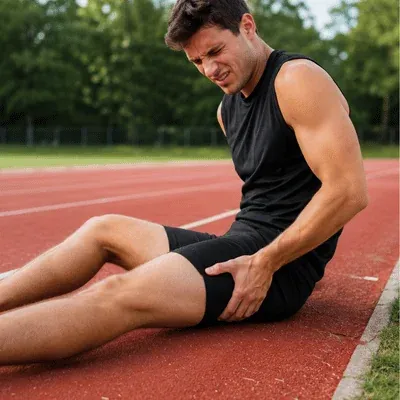
A pulled hamstring is an injury to one or more of the 3 hamstring muscles at the back of the thigh. It often happens during fast running, jumping, kicking, or sudden changes in pace.
Hamstring strains are usually placed into three grades:
Grade 1: A mild strain with some damage to muscle fibers
Grade 2: A partial tear with increased pain, weakness and swelling
Grade 3: A severe or total tear that needs immediate medical attention
You may notice a loud pop, heavy bruising, major weakness, or trouble walking after injury. Some tendon injuries and full tears may need imaging or a surgeon's review.
Hamstring Strain Recovery Time by Grade
The ranges below are general estimates. Recovery may take less or more time based on the injury and the athlete.
| Injury grade | Common recovery range | Factors that may delay recovery |
|---|---|---|
| Grade 1 | 1 to 3 weeks | Pain while running, weakness, or a past strain |
| Grade 2 | 4 to 8 weeks | A larger tear, tendon damage, or repeat injury |
| Grade 3 | 3 months or longer | A complete tear, tendon injury, or surgery |
Grade 2 hamstring strain recovery time should not be based on the calendar alone. Before returning, the athlete should regain strength and complete a gradual running plan.
In estimating recovery, the 2022 JOSPT Clinical Practice Guideline takes into account pain, strength, tenderness and walking ability. The 2023 London International Consensus also recommends that clinicians consider the nature of the injury, sport and needs of individual athletes.
What Does Pulled Hamstring Treatment Include?
Protecting the injured area without completely stopping movement is the main goal of early pulled hamstring treatment. During the first few days, ice may help lessen pain. When it feels safe and doesn't worsen symptoms, light movement can start.
A sports physical therapy program might include:
- Pain and movement assessments
- Strength training gradually
- Hip and core control exercises
- A program that can be walked to
- Running more quickly and practicing sports
- Testing for return to sport
Hands-on treatment may help ease pain or tightness for a short time. Still, exercise and a steady return to running do most of the work during recovery.
Which Hamstring Rehab Exercises Support Recovery?
Hamstring rehab exercises should match the athlete's current pain level and strength. Starting difficult exercises too soon can place extra stress on the healing muscle.
Common exercises include:
- Bridges and single-leg bridges
- Hamstring curls using a ball or slider
- Hip hinges and Romanian deadlifts
- Split squats and step-ups
- Running drills
- The Nordic hamstring curl
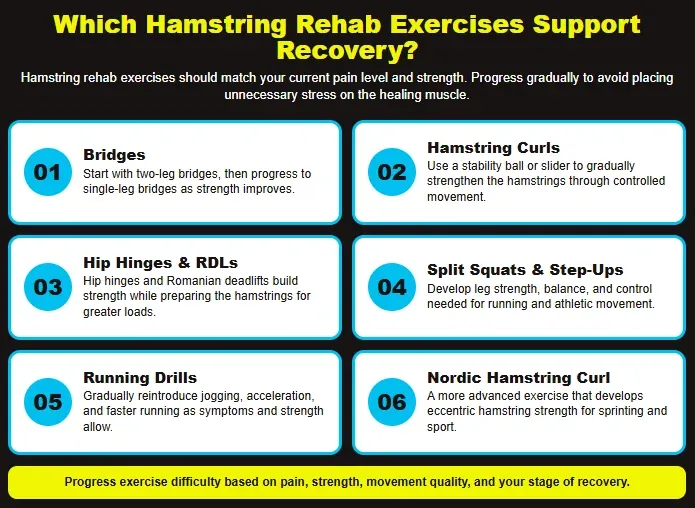
The Nordic hamstring curl trains the muscle as it lengthens under load. That type of strength is important during the swing phase of sprinting.
Most athletes start the Nordic hamstring exercise after they are able to do simpler strength exercises. It should be part of a larger scheme, not the only exercise. A therapist can adjust the range, the support, the sets, and the timing.
What Tests Clear You to Sprint?
An athlete's readiness to sprint cannot be determined by a single test. Pain, movement, strength, running progress, and sports skills should all be reviewed by a therapist.
Testing may include:
- Pain: No discomfort when engaging in regular movement, strength training, or running drills
- Motion: Hip and knee movements close to the uninjured side
- Strength: Outstanding knee bending and hip extension at different angles
- Quick lengthening: During a quick leg raise, the Askling H-test may indicate discomfort or anxiety
- Running load: A gradual increase from jogging to almost maximum speed
- Sport skills: Cutting, jumping, kicking, and repeated sprint work
- Recovery: Following training, no discernible increase in pain or decline in function
For example, a soccer player may run at 60%, then move to 75%, 85%, and near-full speed. The next step depends on how the leg feels during and after each session.
Confidence also matters. An athlete should feel ready to move freely without guarding the injured leg.
How Do You Choose a Sports Physical Therapy Clinic?
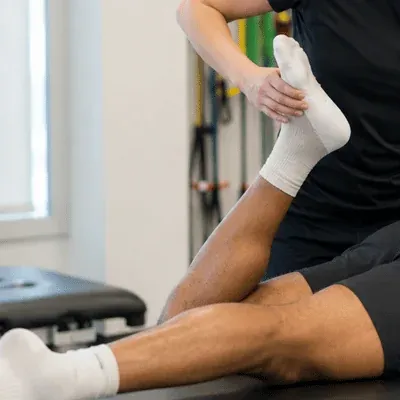
Before choosing a clinic, ask questions such as:
- How often do you treat hamstring strains?
- Do you measure strength with objective equipment?
- Do you use running progression programs?
- Can you provide sport-specific drills?
- Do you perform return-to-sport testing?
AthleteRx works with sprinters, soccer players, and athletes in Parker, Plano, and Allen. The clinic provides testing and guided return-to-running programs.
AthleteRx offers sports physical therapy and return-to-sport testing for athletes in Parker, Plano, Allen, and nearby North Texas communities.
Texas law allows eligible physical therapists to begin care without a referral for up to 30 calendar days. Insurance plans may have separate rules, so review your benefits before treatment.
Pain relief is only one part of recovery. Athletes also need to rebuild strength, regain speed, and complete tests that match their sport. A clear rehab plan makes the return process safer and easier to follow.
Ready to get moving again? Book Now with AthleteRx Performance Rehab for a sports physical therapy assessment and a return-to-sprint plan based on your injury and goals.