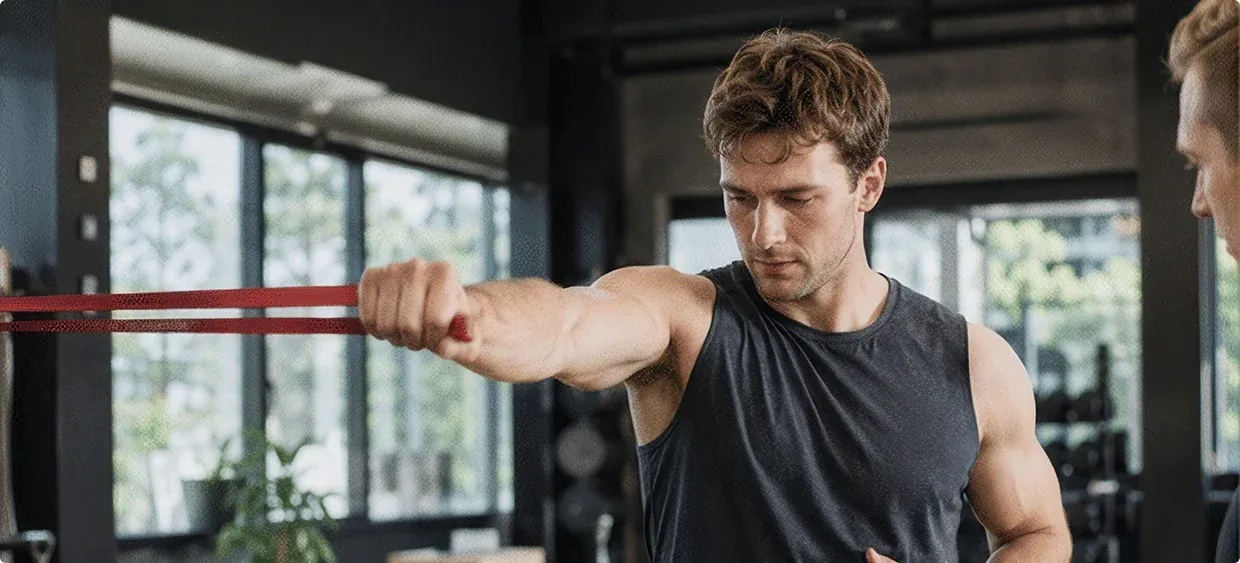
Shoulder impingement recovery time is different for every athlete. A mild case may settle within a few weeks. Pain that has lasted for months often needs a longer rehab plan.
Your sport, training load, strength, sleep, and injury history all affect recovery. The goal is not just to reduce pain. You also need to rebuild enough strength for pressing, throwing, swimming, or lifting.
What Is Shoulder Impingement?

Pain around the rotator cuff and adjacent bursa is often referred to as shoulder impingement. Repetitive lifting, throwing, or overhead work can cause these tissues to become sore.
Tendon entrapment beneath a bone is not always the cause. Stiff joints, weak shoulder muscles, abrupt training changes, and poor load control can all be contributing factors.
Common symptoms include:
- Pain when raising or lowering the arm
- Soreness at the front or side of the shoulder
- Pain during overhead sports
- Discomfort while lying on the sore side
- Weakness during pressing or reaching
- Pain that builds after training
A proper exam helps rule out neck pain, joint problems, and tendon tears.
When to Seek Evaluation for Shoulder Pain
Not all shoulder pain is caused by overuse. If an athlete's symptoms are severe, began after a major injury, or are not improving as anticipated, they should be evaluated.
Get a quick medical evaluation if you have:
- Abrupt weakness following a heavy lift, fall, or collision
- A pop that causes pain or weakness right away
- Incapacity or difficulty raising the arm
- Significant bruising, swelling, or an awkward-looking shoulder
- Numbness or tingling that persists into the arm or hand
- Pain that continues to worsen despite reducing your training load
- Shoulder pain that shows little or no improvement after a couple of weeks of appropriate self-care
A sudden injury combined with weakness can sometimes indicate a rotator cuff tear or another injury that needs closer assessment. Severe pain, sudden swelling, visible deformity, or being unable to use the arm after an injury warrants more urgent medical attention.
Athletes with persistent symptoms do not need to wait until the shoulder becomes impossible to use. An earlier assessment can help identify the problem and determine what training changes or rehabilitation are appropriate.
How Long Does Shoulder Impingement Recovery Time Take?
Many athletes start to notice progress within several weeks. Full recovery may take six to twelve weeks or longer.
The table below gives a rough guide. It is not a fixed schedule.
| Phase | Timeline | Goal |
|---|---|---|
| Settle pain | Weeks 1 to 2 | Reduce painful loads and restore motion |
| Build control | Weeks 2 to 6 | Improve rotator cuff and shoulder blade strength |
| Restore strength | Weeks 6 to 12 | Add heavier lifts and overhead work |
| Return to sport | Week 8 onward | Complete sport drills without a flare-up |
Some athletes move through these stages faster. Others need more time, especially when pain has been ignored.
Return to sport should be based on function, not a date. The shoulder should handle strength tests, repeated movement, and sport drills without a major increase in pain.
Shoulder Impingement vs Rotator Cuff Tear
The shoulder impingement vs rotator cuff tear question is not always easy to answer at home. Both can cause pain, weakness, and poor sleep.
Shoulder impingement often refers to pain from irritated rotator cuff tissue. A rotator cuff tear means some tendon fibers are damaged.
Signs that need closer review include:
- Sudden pain after a fall or heavy lift
- A pop at the time of injury
- Clear loss of strength
- Trouble lifting the arm
- Pain that does not improve
A therapist or doctor may use strength tests and movement checks first. Ultrasound or MRI may be ordered when a tear is more likely.
Managing Shoulder Pain During Bench Press
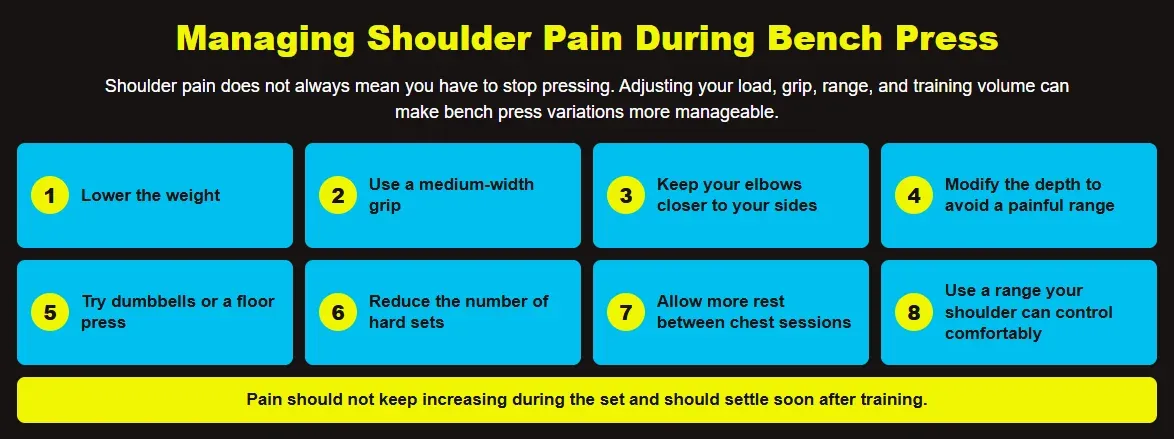
Shoulder pain and bench press problems are common in lifters. The cause may be too much weight, a wide grip, a deep range, or high weekly volume.
You may still be able to press with a few changes:
- Lower the weight
- Use a medium width grip
- Keep the elbows closer to your sides
- Modify the depth to avoid painful range
- Use dumbbells or a neutral grip
- Try floor presses or board presses
- Focus on incline or landmine pressing
- Reduce weekly pressing volume
Pushing through sharp or increasing pain is not helpful. A therapist can assess your shoulder and suggest better training options.
Shoulder Impingement Exercises to Avoid or Change
There is no universal list of shoulder impingement exercises to avoid. The exercises that worsen your pain depend on your strength, range, and training load.
Common aggravating movements include:
- Wide-grip bench press or overhead press
- Behind-the-neck pressing or pulldowns
- Heavy dips with excessive forward lean
- Upright rows pulled too high
- High-volume throwing or swimming without rest
Instead of stopping all upper body work, adjust the range, load, or exercise choice. A therapist can help identify safer options.
Physical Therapy for Shoulder Impingement
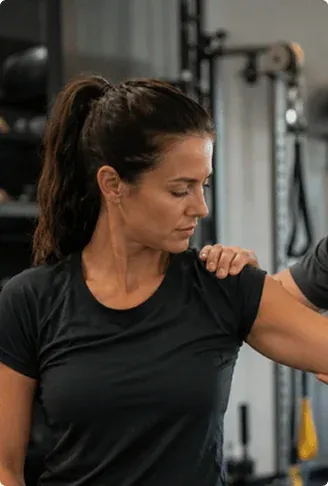
Physical therapy for shoulder impingement begins with a review of your symptoms, training, and shoulder function. The therapist may check your motion, strength, posture, and movement patterns.
Treatment may include:
- Exercises to improve rotator cuff and scapular strength
- Manual therapy to address stiffness or muscle tension
- Load management guidance for training
- Progressive strengthening for pressing and overhead work
- Return-to-sport testing when appropriate
A therapist can also help you return to bench pressing, overhead lifting, or throwing with less risk of another flare-up.
AthleteRx works with lifters, throwers, and overhead athletes in Parker, Plano, and Allen. The clinic provides hands-on care and strength testing.
Manual therapy may help a stiff or painful shoulder move more freely. Dry needling may help some people with muscle tension. These treatments should support exercise rather than replace it.
In Texas, qualified physical therapists may treat patients without a referral for a limited period. Insurance plans may still have their own rules.
The Bottom Line
Recovery time from shoulder impingement is influenced by more factors than just pain. The most important factors are intelligent training modifications, consistent strength training, and unambiguous return-to-sport assessments. You can resume lifting, throwing, or swimming without hurrying the process if you have the right plan.
Still dealing with shoulder pain during training? Book an evaluation with AthleteRx Performance Rehab and get a plan built around your sport, goals, and current strength.