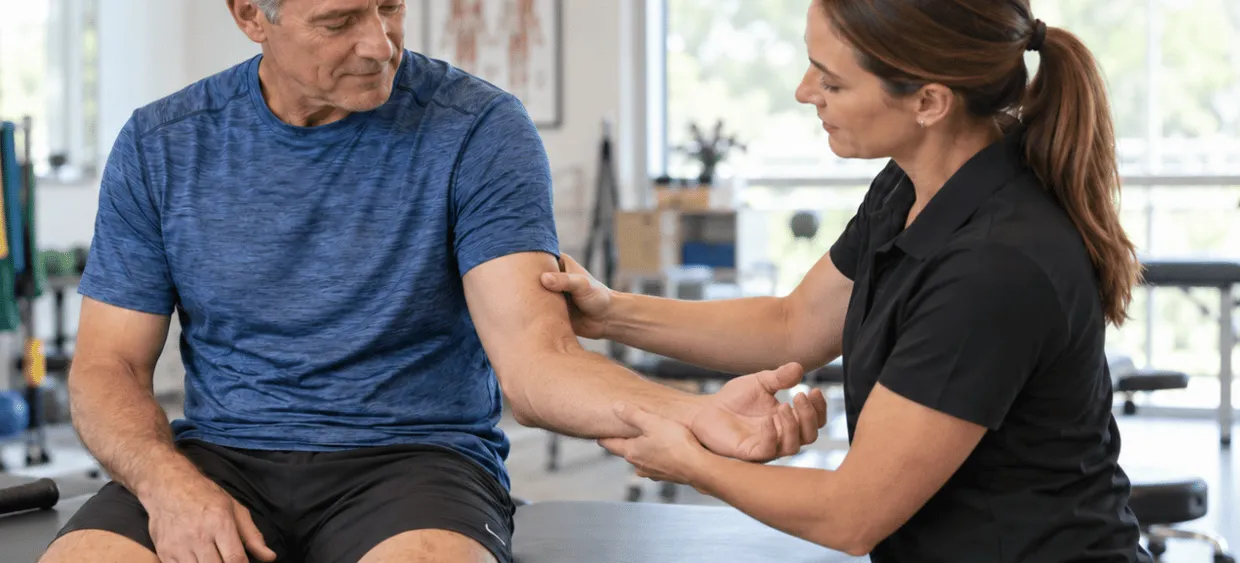
Pickleball injuries are getting more attention, mostly because the sport has exploded in popularity. The Sports & Fitness Industry Association says 24.3 million Americans played in 2025. In 2020, that figure was only 4.2 million.
That is a more than fivefold jump in five years, and the association named pickleball the fastest-growing sport in the U.S. for the fifth year in a row. The number of "core" players, meaning people who play at least eight times a year, grew from 1.4 million in 2020 to 7.5 million in 2025.
More people playing means more chances for someone to get hurt. It does not mean pickleball is suddenly unsafe.
What Are the Most Common Pickleball Injuries?
The knee comes up a lot in injury reports, but elbows and shoulders are not far behind.
A 2025 Sports Medicine-Open survey asked 1,758 U.S. players about problems they had over the previous 12 months.
Researchers from Saint Louis University counted every physical complaint, from nagging aches to injuries that stopped play. Overall, 63.5% of players reported at least one problem, and 40.8% had an injury that kept them from playing for at least a day.
| Body Part | Percentage |
|---|---|
| Knee | 23.1% |
| Shoulder | 22.3% |
| Elbow | 16.4% |
The knee was the most reported single joint. The combined thigh, leg, and foot region came next at 26.9%, and the back was reported by 19.9% of players. Players also described the injury that bothered them most. Overuse problems were the most common (26.3%), followed by sprains (23.8%) and muscle strains (20.7%).
One detail from the survey is easy to overlook: plenty of people were still playing while something hurt. About 35.9% said they had pain or an ongoing injury at the time of the survey. The researchers estimated that roughly one in three players continued to play despite pain.
Then there are the injuries that happen all at once.
A study in the Orthopaedic Journal of Sports Medicine estimated 66,350 pickleball injuries treated in U.S. emergency rooms between 2013 and 2022. Falls were involved in 65.5% of those cases.
Fractures were the most common diagnosis (32.7%), followed closely by strains and sprains (30.8%). The wrist was the most frequently injured body part, and the authors pointed to the common tendency to land on an outstretched hand during a fall. Players aged 65 to 80 accounted for 61% of the estimated injuries, and women sustained 68.1% of all fractures.
That is why injury prevention is not just about stretching your elbow after a game. Good footing, balance, and a safe court matter too.
Why Do Pickleball Injuries Happen?
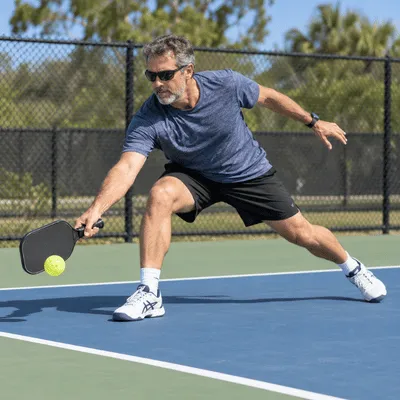
Pickleball does not take up much space, but your body still has to work hard. A standard court is 20 feet wide and 44 feet long, smaller than a tennis court, yet the game still calls for quick acceleration, sudden stops, and fast changes in direction.
Think about what can happen during a single rally. You may reach for a dink, brake quickly, change direction, and then chase an overhead ball a few seconds later. Keep repeating those movements for an hour or two and the workload builds. The paddle also puts repeated demands on the wrist and elbow, which researchers have linked with overuse problems in those areas.
The 2025 Sports Medicine-Open survey found higher injury odds among players who:
- Played more often each week
- Had less than five years of experience
- Put less value on injury prevention
Falls are especially important when it comes to lower-body injuries. A 2026 Cureus review looked at 15 studies on pickleball injuries affecting the legs and feet. Falls showed up most often. Forward lunges and ankle rolls were also common.
Sprains, strains, and fractures were the most commonly reported injury types, and Achilles tendon ruptures were also notably represented.
Most studies in that review also found more injuries among players aged 50 and older.
The same review pointed to the non-volley zone, often called the kitchen. This seven-foot area next to the net often forces players to reach, bend, lunge, and stop suddenly, which the authors said increases injury exposure.
Rehab Tips for Elbow, Knee, and Shoulder Pain
One sore spot can have several possible causes. So before you copy exercises from a video, it helps to know what you are actually dealing with.
The 2025 review in Current Physical Medicine and Rehabilitation Reports noted that a thorough outpatient exam looks beyond the painful area. For example, a clinician may assess hip function in someone who comes in with knee pain.
Pickleball Elbow
Pickleball elbow usually refers to pain near the outside of the elbow. Lateral elbow tendinopathy is one possible cause.
It is the same condition commonly known as tennis elbow, although many people who develop it do not play racquet sports at all. Clinical practice guidelines from two academies of the American Physical Therapy Association describe it as pain where the wrist extensor muscles attach near the outside of the elbow, made worse by loading those muscles.
The problem often shows up with gripping, wrist movement, and repeated hitting. In other words, things you do constantly with a paddle in your hand.
It can also linger when it is ignored. The same guidelines note that more than half of people who seek general medical care still report symptoms after a year, and up to 20% report pain lasting three to five years.
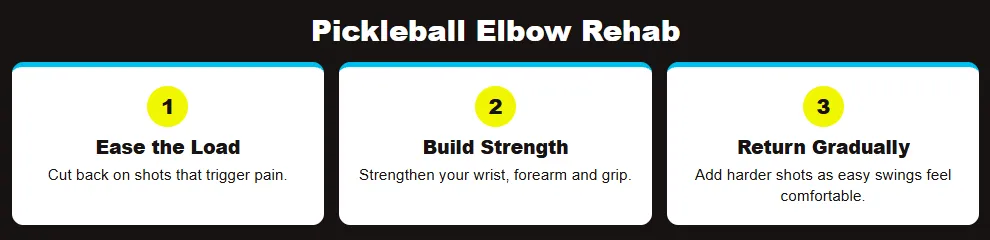
You may not need to stop everything at once. Instead, rehab can start by changing what bothers the elbow most:
- Ease up on the shots that bring the pain on.
- Use resistance work to rebuild the wrist, forearm, and grip.
- Bring the harder shots back gradually once the easier swings no longer stir up the elbow.
There is no single exercise or treatment that fixes every case. A 2024 Cochrane review found only small short-term improvements from exercise and hands-on care. APTA guidance still includes resisted wrist work, with the load increased little by little as the arm becomes more comfortable with it.
The guideline also recommends working the wrist extensor muscles in several ways, including isometric, concentric, and eccentric exercises. For someone getting back to sport, that usually means building the demand up in stages rather than jumping straight into full play. A forearm strap or wrist support may ease symptoms during activity for a while, although the evidence is less clear on whether either provides lasting benefit.
Simply resting until the pain disappears is not always enough. The arm still has to get used to doing its job again.
Pickleball Knee Injuries
Pickleball knee injuries are not all the same.
For one player, the knee may slowly start aching after longer sessions. For another, pain starts after one awkward twist.
Pain at the front of the knee is one possible problem. Sprains and meniscus injuries can happen as well.
In a small 2025 review of imaging records from 43 pickleball injury cases, the knee was the most commonly involved lower-body area, and meniscal tears were the second most common single injury after wrist fractures.
Pain around the kneecap. Rehab usually includes strengthening the hips and knees, since both play a role in how the leg handles movement. Exercise is recommended as a key part of the treatment as part of education.
Men can be a little different. The 2024 EU-US Meniscus Rehabilitation Consensus, published in 2025, recommends starting many degenerative meniscus problems with non-surgical treatment. Surgery is not always the best course of action because physical therapy can also help some sudden meniscus tears.
That consensus brought together 67 experts from 14 countries, including orthopaedic surgeons and physical therapists. It also noted that general knee injury reduction programs can help prevent meniscus injuries.
When Pickleball Starts Bothering Your Shoulder
Serves, volleys, and overhead shots can put the shoulder through a lot of repeated work. In the 2025 survey, shoulder problems were the second most commonly reported issue among women, behind knee problems.
If pickleball shoulder pain keeps coming back, rotator cuff tendinopathy is one possible cause. It is not the only one.
A 2025 guideline supported by the American Physical Therapy Association recommends an assessment and non-surgical rehab for rotator cuff tendinopathy.
Published in the Journal of Orthopaedic & Sports Physical Therapy, it gives its strongest rating to exercise therapy, including progressive resistance training and motor control work. It advises against imaging as a first step and says corticosteroid injections may offer short-term relief but should not be the first treatment.
As the shoulder starts feeling and moving better, rehab can become more specific to pickleball. That may mean easing back into paddle work first, then gradually bringing serves and overhead shots into the mix instead of testing everything at full effort right away.
Rehab plans described in the pickleball research commonly include rotator cuff and shoulder blade strengthening to prepare for repeated serves, smashes, and volleys. The 2025 guideline also recommends basing return to sport on how well the shoulder tolerates load.
How Do You Know You're Ready to Play Again?
This is where people sometimes rush.
Being able to carry groceries or sleep without pain does not mean your body is ready for quick stops and hard turns on court.
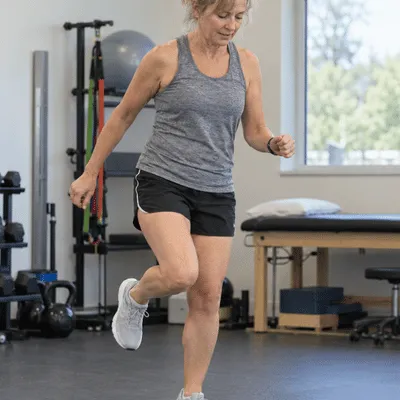
At AthleteRx, return-to-sport testing may compare strength between sides. It can also look at hopping, agility, and mental readiness.
There is no single moment when you suddenly become "ready." Most players work their way back. Daily activity and strength work come first, followed by court drills and easier hitting. Short games can come next, with full play saved for when those earlier steps feel solid.
If an old problem starts showing up again along the way, a sports physical therapy evaluation can help find what still needs work before you return to full matches.
How to Prevent Pickleball Injuries
You cannot make any sport injury-proof. But you can make some of the common mistakes less likely.
Here is how to prevent pickleball injuries:
- Use a real warm-up. Do not rely on the first game to loosen you up.
- Give your legs some attention off the court. Strength and balance both matter when you lunge or change direction.
- Do not forget the upper body. Regular shoulder and forearm work can help with repeated hitting.
- Be sensible when adding court time. An extra session here and there is easier to handle than suddenly doubling how much you play.
- Choose shoes made for court movement, especially the side-to-side work that pickleball requires.
- Take a quick look at the surface before playing. Water, debris, and uneven areas can turn a normal step into a fall.
- Consider eye protection. A fast-moving ball can cause an eye injury at close range.
- Keep water nearby on hot days, particularly when you plan to play for a while.
Players around North Texas have plenty of places to play, including courts in McKinney and Frisco. More court time is great, but your body still needs time to catch up.
The Bottom Line
Pickleball injuries are frustrating when you would rather be on court. Good rehab is not only about getting the pain to settle. It should help you feel ready for the stops, turns, reaches, and quick reactions the game actually demands. If pain keeps cutting your games short, book a sports physical therapy evaluation with AthleteRx Performance Rehab and get a plan built around your return to play.